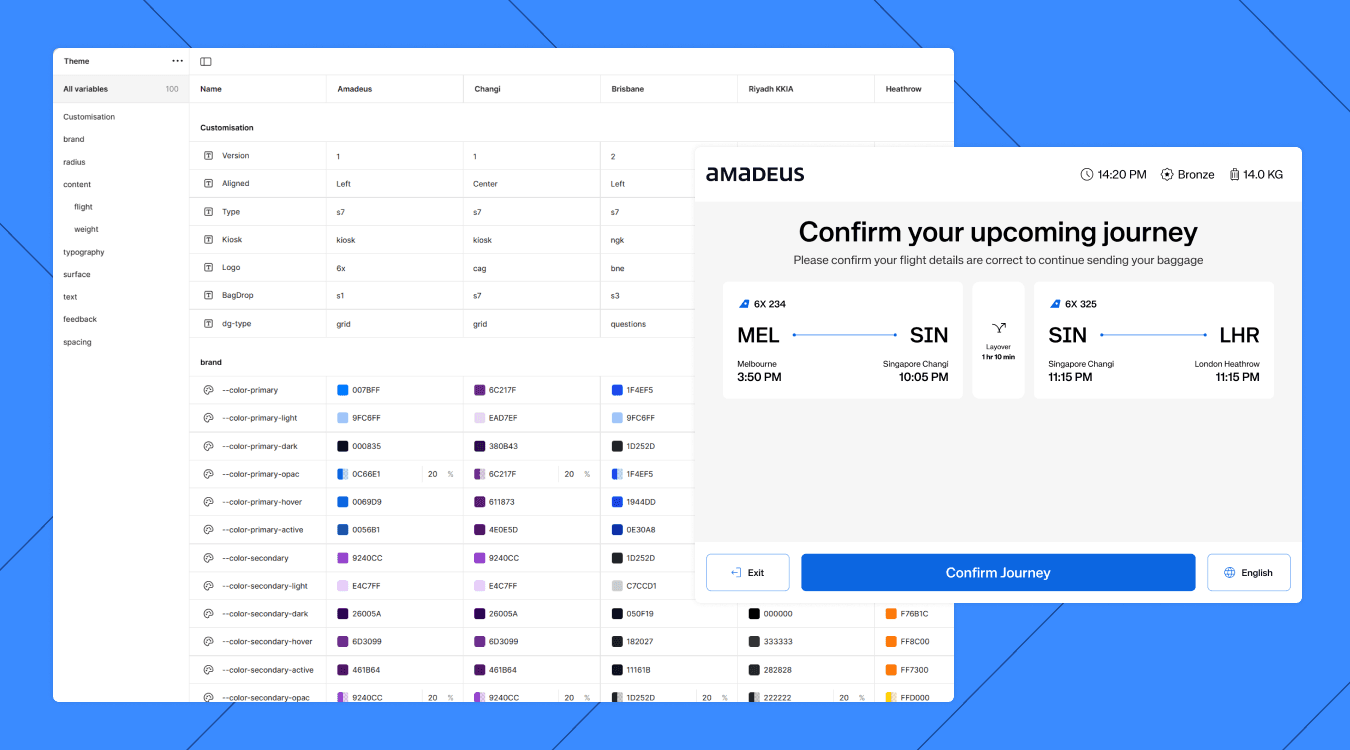
A Scalable Design System for Amadeus Self-Service Kiosks
As Lead Product Designer, I spearheaded the creation of a white-label design system for Amadeus' self-service airport kiosks (bag taggers, bag drop, biometrics). My solution enabled rapid, consistent branding for global airports like Heathrow, Changi, and JFK, while using research and real-user data to significantly reduce passenger friction and operational costs.
The Challenge
The self-service platform was causing significant operational friction and a poor passenger experience.
- High Passenger Confusion: Users frequently mistook bag-tag kiosks for full check-in terminals, leading to wasted prints and increased staff workload.
- Inefficient Theming: Rebranding the UI for each new airport was a slow, manual process that created design inconsistencies and accessibility risks.
- Poor User Guidance: Critical on-screen instructions were often missed, causing errors in tasks like attaching bag tags.
The Solution: A Token-Based, Research-Led Approach
My strategy combined a scalable design system with continuous, data-informed UX improvements.
Figma Theming Architecture:
I designed and implemented a token-first theming system. Using design tokens for colours, typography, and spacing, we built a single, robust component library. This allowed us to instantly re-skin the entire UI for any airport brand without touching the core interaction logic.
Research-Led UX Enhancements:
Using insights from customer service agents, usability testing, and Datadog RUM, we targeted key friction points:
- Clarified Kiosk Purpose: Changed headline copy from "Check-in" to "Print Bag Tags."
- Improved User Guidance: Introduced short, contextual animations during printer processing to teach correct bag tag attachment.
- Reduced Waste & Errors: Added a simple confirmation step showing the number of tags to be printed and redesigned the bag selection page to clarify complimentary vs. paid allowances.
Results & Impact
- 90% Faster Airport Rebranding: The token-based Figma system reduced the design and engineering effort to deploy a new airport theme from weeks to hours.
- Reduced Passenger Confusion & Waste: Datadog RUM data showed a significant drop in session errors and unnecessary prints after deploying the new copy and confirmation screen.
- Fewer Staff Interventions: On-site observations confirmed a higher rate of first-time success for tag attachment, freeing up roaming customer service agents to focus on complex issues.
- Established a Data-Informed Design Process: Embedded Datadog RUM into our workflow, creating a continuous feedback loop to validate changes and prioritise high-impact fixes.